Understanding Why Employees Stay: A Mixed-Methods HR Study
Context & Problem Space
Zap Energy, Inc. is a fusion energy start-up in Everett, WA. Everything is new there, from the HR systems to company traditions.
The talent pool is tiny in the fusion energy industry. Of the course of 1.5 years as an HR Generalist, I saw employees jump from start-up to start-up, each believing that that particular company’s approach would be the one to create continuous fusion energy for the first time. Employee satisfaction and retention is critical to achieving Zap Energy’s success.
I gathered this information from a variety of sources including:
Employee Interviews (Stay, Exit, Intern)
Surveys (Benefits, Great Place to Work, Employee Resource Group)
Observational Data (Lunch Conversations, Casual Check-Ins, All Hands Meetings)
RESEARCH QUESTIONS
What motivates employees to stay at Zap long-term?
What aspects of the employee experience do they value most?
What areas are creating frustration or disengagement?
Where are there misalignments between employee expectations and our current People programs?
Data Sources
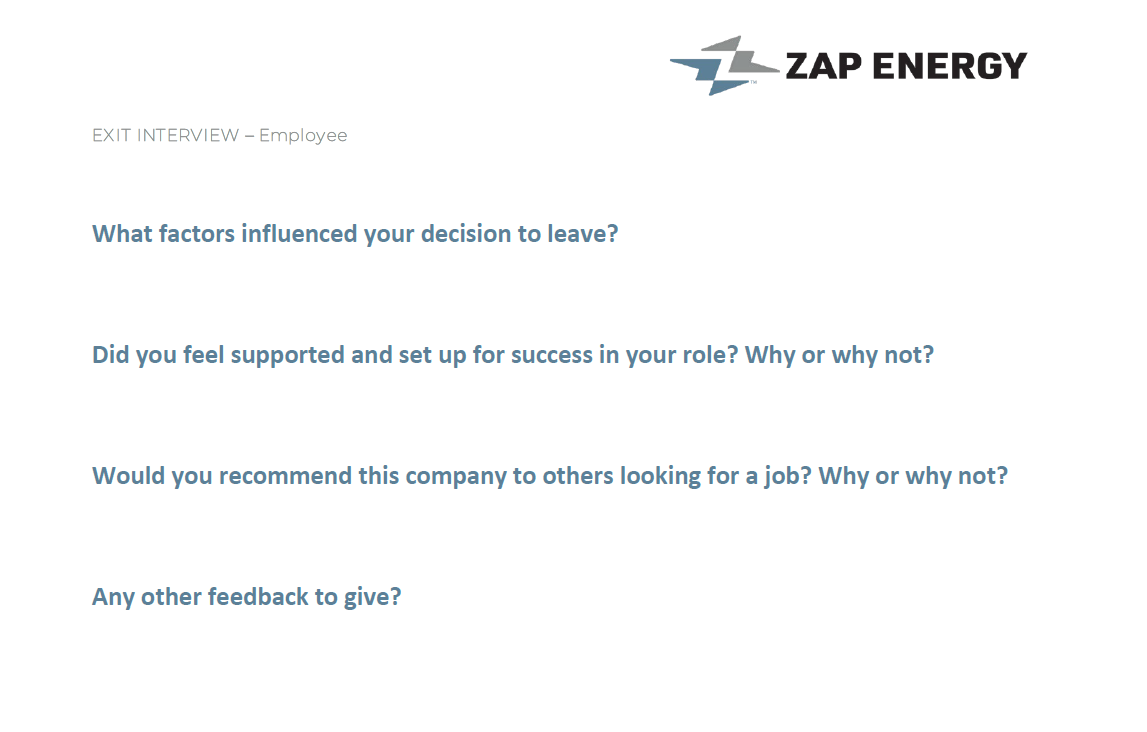
Exit Interviews
When an employee leaves the company, I sit down with them and ask a series of questions about the circumstances of their departure, and the nature of their experience at the company.

Benefits Survey
The fusion energy industry is incredibly competitive, so every 6 months we conduct Stay Interviews with our top performers to understand needs, wants, and desires.
Employee Resource Group Survey
The fusion energy industry is incredibly competitive, so every 6 months we conduct Stay Interviews with our top performers to understand needs, wants, and desires.
Stay Interviews
The fusion energy industry is incredibly competitive, so every 6 months we conduct Stay Interviews with our top performers to understand needs, wants, and desires.